- Home
- About Us
- Membership
- Education
- FSMPAC
- Sustaining Firms
- Conference
- Newsroom
- Resources
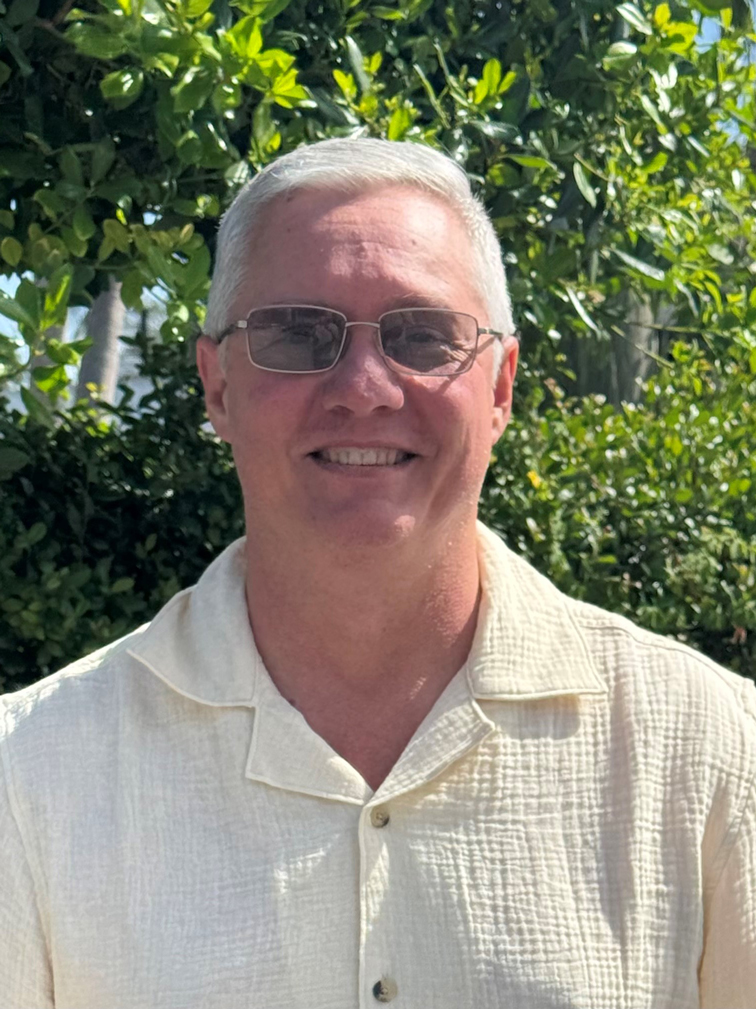
President's MessageBrion Yancy is the 2026-27 FSMS President. November 2026
Hello my fellow surveyors, Some of you know I am in Japan meeting family for a couple of weeks and it got me thinking about the value of cultural diversity and relationships, but I have to be honest, this message was written with the help of AI. As President of FSMS, I have the privilege of representing a profession built on precision, integrity, cooperation, and a shared commitment to understanding the world around us. During my visit, I have been reminded of something that extends far beyond surveying and mapping: the tremendous value of cultural diversity and the importance of building relationships across borders. We live in a world that is increasingly connected. Technology allows us to communicate across continents in seconds, businesses operate internationally, and professionals collaborate with colleagues they may never meet in person. Yet, despite these connections, there is still tremendous value in stepping outside our familiar surroundings, experiencing another culture, and taking the time to understand how others see the world. Cultural diversity is not simply about recognizing that people speak different languages, practice different traditions, or celebrate different holidays. It is about appreciating that every culture brings its own history, experiences, perspectives, and knowledge to the table. It is understanding that our differences are not obstacles to overcome, but opportunities to learn, grow, and become better together. One of the greatest strengths of any organization, profession, or society is the diversity of the people who contribute to it. Each individual brings a unique perspective shaped by their upbringing, education, experiences, and cultural background. When we welcome those perspectives, we create opportunities for innovation, stronger relationships, and better solutions to the challenges we face. This is especially true in the surveying and mapping profession. Although our professional responsibilities may differ from one country to another, the fundamental principles of our work are remarkably similar. We establish boundaries, measure and document the world around us, support infrastructure development, protect property rights, and provide the spatial information upon which communities and economies depend. The tools, technologies, regulations, and methodologies may vary, but our commitment to accuracy, professionalism, and public trust is universal. There is tremendous value in learning how our counterparts in other countries approach these responsibilities. Japan has a rich history of engineering, innovation, craftsmanship, and attention to detail. Its commitment to precision and continuous improvement offers lessons that extend well beyond any single profession. Likewise, Florida and the United States have their own experiences, innovations, and professional practices that may offer value to our international colleagues. When we exchange ideas, compare experiences, and share knowledge, everyone benefits. We may discover a better way to approach a technical challenge, a different perspective on professional standards, or an innovative application of technology. Sometimes, the greatest lesson is simply discovering that someone on the other side of the world has faced the same challenge and found a different way to address it. However, the value of cultural diversity extends beyond professional knowledge. It teaches us humility. When we travel, meet people from different backgrounds, and experience unfamiliar traditions, we are reminded that our own way of doing things is not necessarily the only way, or even the best way. We begin to recognize that there is much we do not know and much we can learn from others. That realization is important for leaders. Leadership is not simply about having the answers or directing others toward a particular objective. It is about listening, respecting different viewpoints, creating opportunities for participation, and recognizing the value that each individual brings to the organization. Those of you who know me have probably heard me say you can’t push a rope. You must pull it, but if you pull it too quickly your people will get rope burn and let go. As President of the Florida Surveying and Mapping Society, I believe these principles are essential to the future of our profession. Our society is strongest when we encourage participation from people with different experiences, backgrounds, generations, and perspectives. We must continue creating an environment where new professionals feel welcome, experienced professionals feel valued, and everyone has an opportunity to contribute. The future of surveying and mapping will depend not only on technological advancements, but also on our ability to work together. Emerging technologies, including artificial intelligence, satellite positioning, unmann ed systems, and advanced geospatial applications, are changing the way our profession operates. These developments create opportunities, but they also bring challenges that no individual, organization, or country needs to address alone. International cooperation allows us to share knowledge, develop stronger professional relationships, and prepare for the challenges ahead. There is another important lesson that cultural diversity teaches us: respect. Respect does not require us to agree on everything. It requires us to recognize the dignity and value of others, even when their beliefs, traditions, or approaches differ from our own. It requires an open mind, a willingness to listen, and an appreciation for the experiences that have shaped another person’s perspective. In many ways, this is the foundation of meaningful relationships. Whether we are working with a colleague, serving a client, leading an organization, or visiting another country, mutual respect creates the trust necessary for cooperation. My visit to Japan has provided an opportunity to appreciate a culture with a remarkable identity, history, and sense of community. It has also reinforced the idea that, despite our differences, people share many of the same aspirations. We want to build successful communities, provide opportunities for future generations, preserve what is important, and leave the world a little better than we found it. Those common aspirations are more powerful than the differences that sometimes separate us. I believe professional organizations such as the Florida Surveying and Mapping Society have an important role to play in promoting this understanding. Our responsibility should not end at the boundaries of our state or even our country. We should encourage international friendships, professional exchanges, and opportunities for our members to experience different cultures and perspectives. These relationships remind us that we are part of something larger than ourselves. As I reflect on this experience, I am reminded that surveying is fundamentally about establishing connections. We connect points on the earth, establish relationships between boundaries, and create the framework upon which communities are built. Perhaps there is a broader lesson in that work. Just as we establish connections across the landscape, we should also strive to establish connections between people, cultures, and nations. The most meaningful boundaries are not the ones that separate us, but the ones we work together to understand, respect, and responsibly manage. As President of the Florida Surveying and Mapping Society, I am proud to represent our members, our profession, and our state. But I am equally proud to be part of a global community of professionals who understand that knowledge has no borders, respect has no language, and meaningful relationships have no geographical limits. Ultimately, cultural diversity makes us stronger because it challenges us to think differently, encourages us to listen more carefully, and reminds us that progress is best achieved when we work together. Our differences give us perspective. Our shared values give us common ground. And our willingness to learn from one another builds a better future for us all. Thank you, Buraion Yanshi Previous 2026 Messages |
Announcements
2027 Membership is Available!
Click Here to Join/Renew
Our Exhibitors/Sponsors


























Upcoming Events
Tue Jan 19, 2027(FSMS) - NSPS Certified Floodplain Surveyor (CFS) Training & Certification Program Category: Events |